
Table of Contents
Starting a sweepstakes business in 2026 isn’t about “getting in early.” That window closed years ago. It’s about doing it correctly — legally structured, operationally tight, and defensible.
If you’re searching for how to register as a sweepstakes agent in 2026, you’re probably in one of three spots:
- You already operate a game room and want to convert to a compliant promotional model.
- You’re evaluating the sweepstakes agent registration process before investing.
- You’re comparing platforms like Panda Master, Orion Star, or Noble 777 and want to understand what’s legally required first.
Let’s walk through this step by step — without shortcuts.
Step 1: Understand the Legal Framework Before Filing Anything
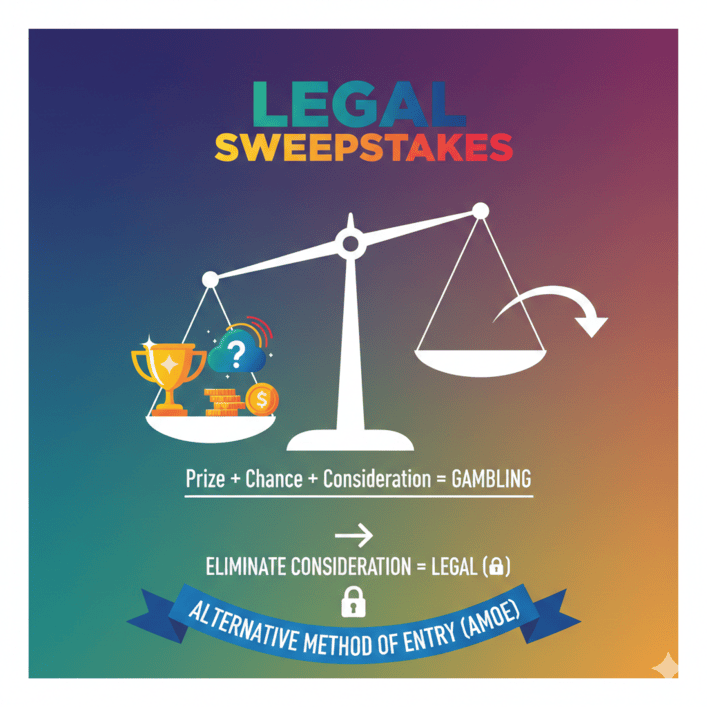
You cannot start a sweepstakes business legally without understanding the prize–chance–consideration test.
In U.S. law, gambling typically involves three elements:
- Prize
- Chance
- Consideration (payment to enter)
To operate legally under a promotional sweepstakes model, you must eliminate consideration by offering a legitimate Alternative Method of Entry (AMOE).
The Federal Trade Commission outlines promotional compliance principles in its guidance on advertising and promotions through the Federal Trade Commission.
If your model lacks a clear “no purchase necessary” pathway, you are exposed.
This is why Elite Entertainment emphasizes transparency through pages like its No Purchase Necessary policy and detailed Legal Guide.
Step 2: Choose Your Business Structure (LLC vs Corporation)
Why Most Sweepstakes Operators Form an LLC
Most operators entering the sweepstakes distribution or agent space choose to form a Limited Liability Company (LLC).
Why?
- Personal liability protection
- Simpler tax election flexibility
- Lower ongoing compliance overhead
The U.S. Small Business Administration’s Choose a Business Structure guide provides a clear breakdown of entity types and when each structure makes sense.
For sweepstakes agents, an LLC is common because:
- It shields personal assets from operational risk.
- It allows partnership revenue splits between operators or investors.
- It simplifies scaling across multiple locations or territories.
Quick Comparison
| Business Structure | Liability Protection | Tax Flexibility | Operational Complexity | Best Fit |
|---|---|---|---|---|
| Sole Proprietorship | None | Low | Very Simple | Small single operators testing concept |
| LLC | High ✅ | High ✅ | Moderate | Sweepstakes agents & distributors |
| Corporation (C-Corp / S-Corp) | High | Advanced | High | Large multi-state enterprises |
Step 3: Register with Your Secretary of State
This is the formal beginning of the sweepstakes agent registration process.
You’ll file Articles of Organization in your state.
After approval, obtain your EIN directly from the IRS EIN Application Page.
Without an EIN:
- No business bank account
- No payment processing
- No tax filing
Simple. But critical.
Step 4: Review State-Level Sweepstakes Laws
Sweepstakes gaming laws vary by state.
Before signing any platform agreement, review:
- State gaming statutes
- Attorney General enforcement patterns
- Local zoning classifications
Elite Entertainment maintains a consolidated reference at its State Laws resource page and expanded guidance on Skill-Based Gaming Law & Regulation.
Texas? North Carolina? Florida? Each has different enforcement histories.
Step 5: Draft Your Compliance Documents
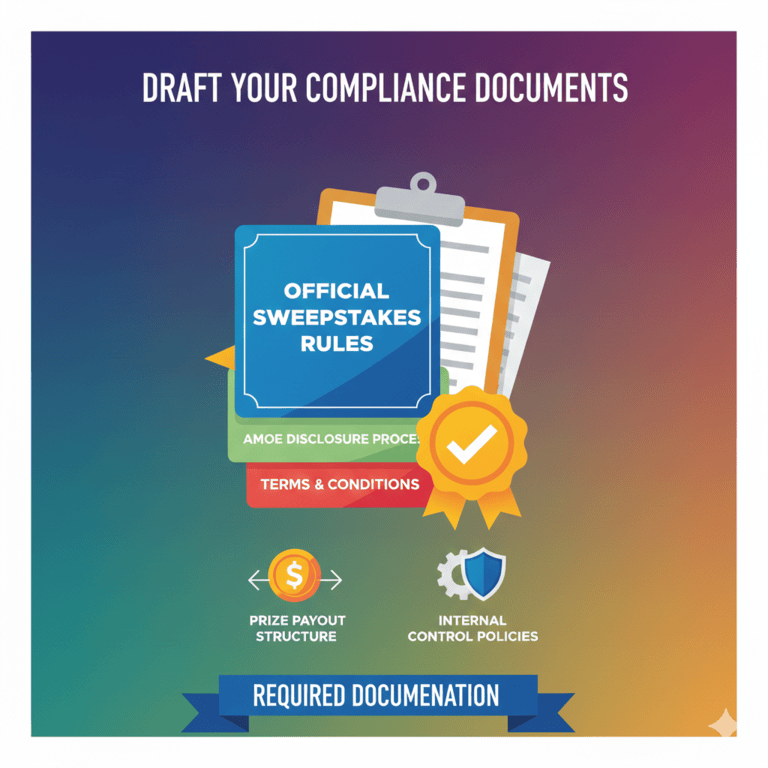
You need more than enthusiasm. You need paperwork.
Required Documentation
- Official Sweepstakes Rules
- AMOE disclosure process
- Terms & Conditions
- Prize payout structure
- Internal control policies
Operators often overlook internal control policies. That’s dangerous.
FinCEN compliance guidelines for financial monitoring can be reviewed through the Financial Crimes Enforcement Network.
Even if you’re not federally classified as an MSB, transaction monitoring practices matter.
Elite Entertainment addresses compliance principles in its Anti-Money Laundering page and FinCEN MSB overview.
Step 6: Select a Sweepstakes Platform Partner

You are not just buying software. You’re choosing compliance infrastructure.
Common distributor platforms include:
- Panda Master distributors and agents
- Orion Star distributors and agents
- Noble 777 distributors and agents
Before signing, ask:
- Does the platform support documented AMOE?
- Is revenue split clearly defined?
- Are audit logs accessible?
- Does the system track promotional entries separately?
And don’t ignore payment architecture. The guide on building a modern gaming payment system explains why infrastructure matters.
Secure Payment Processing
Sweepstakes operators are often categorized as “high-risk.”
You will likely need:
- High-risk merchant account
- Rolling reserve agreement
- Chargeback monitoring
Expect underwriting scrutiny.
Banks will want:
- Corporate documents
- Compliance policies
- Revenue model explanation
Transparency shortens approval time.
Step 8: Local Zoning & Occupancy Permits
If opening a physical location:
- Confirm zoning classification
- Obtain occupancy permit
- Meet ADA accessibility requirements
- Verify fire code compliance
Many shutdowns happen at the municipal level — not federal.
This is where due diligence pays off.
Step 9: Implement AML & Record-Keeping Procedures
You must document:
- Daily credit sales
- Free entry redemptions
- Prize payouts
- ID verification for large wins
Even if not federally mandated, best practice includes:
- Basic KYC verification
- Suspicious activity logging
- Transaction monitoring thresholds
These safeguards protect long-term stability.
Step 10: Estimate Startup Costs
| Category | Estimated Range |
|---|---|
| LLC Filing | $100–$800 |
| Legal Docs | $2,000–$6,000 |
| Platform Setup | $5,000–$25,000 |
| Merchant Reserve | $10,000+ |
| Insurance | $1,500–$5,000 |
Total expected startup capital: $20K–$60K+
For deeper financial planning, review How Much You Need to Start a Game Credit Business.
Common Mistakes That Sink New Agents
- Ignoring AMOE visibility
- Using gambling terminology in marketing
- Poor bookkeeping
- Partnering with non-transparent platforms
- Overlooking state enforcement patterns
Most shutdowns happen because someone cut corners.