Table of Contents
If you’re running a game room in 2026 or planning to open one you already feel it. The ground has shifted. Traditional gambling structures? Heavy oversight. Expensive compliance. Endless friction.
Sweepstakes gaming platforms, on the other hand, have carved out a lane that’s leaner, smarter, and frankly… more sustainable when the promotion is structured correctly.
But here’s the real question:
Which sweepstakes platform actually protects your operation while helping you scale?
Let’s break it down properly.
Why Sweepstakes Platforms Dominate the Game Room Industry in 2026
The sweepstakes gaming industry isn’t a loophole. It’s a structured promotional model built around a dual currency system, an Alternative Method of Entry (AMOE), and compliance-first architecture.
Operators aren’t just chasing profit. They’re chasing durability.
Under promotional guidelines discussed in the FTC’s Lottery & Sweepstakes resources, properly structured sweepstakes promotions separate purchase from prize eligibility. That separation is everything.
In simple terms:
Entertainment currency ≠ prize currency.
That difference protects the framework.
How Sweepstakes Gaming Platforms Actually Work
Let’s strip away the noise.
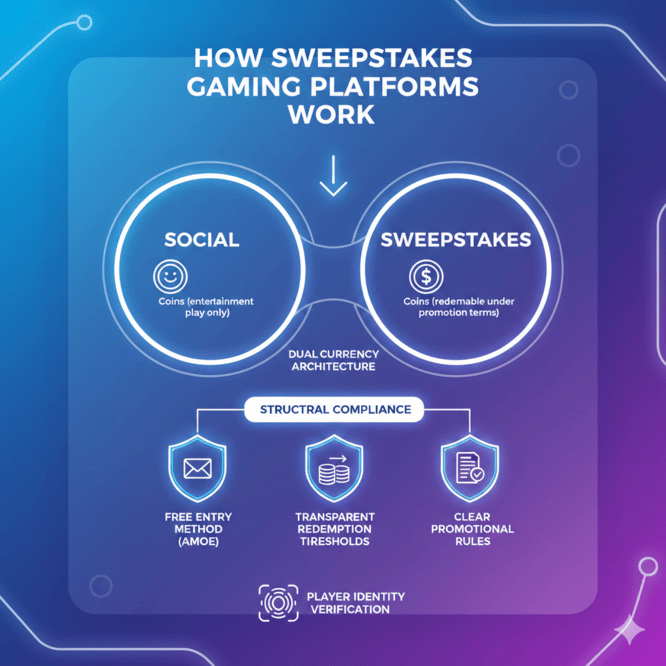
The Dual Currency Architecture Explained
A compliant sweepstakes gaming platform uses:
- Social Coins (entertainment play only)
- Sweepstakes Coins (redeemable under promotional terms)
This isn’t cosmetic branding. It’s structural compliance.
The best systems document:
- Free entry method (AMOE)
- Transparent redemption thresholds
- Clear promotional rules
- Player identity verification
When structured correctly, this model separates consideration, chance, and prize—three legal pillars that regulators watch closely
What Makes a Sweepstakes Platform Worth Your Investment?
Not every provider offering sweepstakes software is built for longevity. Some are flashy. Some are rushed. Some quietly ignore compliance layers.
Here’s what seasoned operators check first:
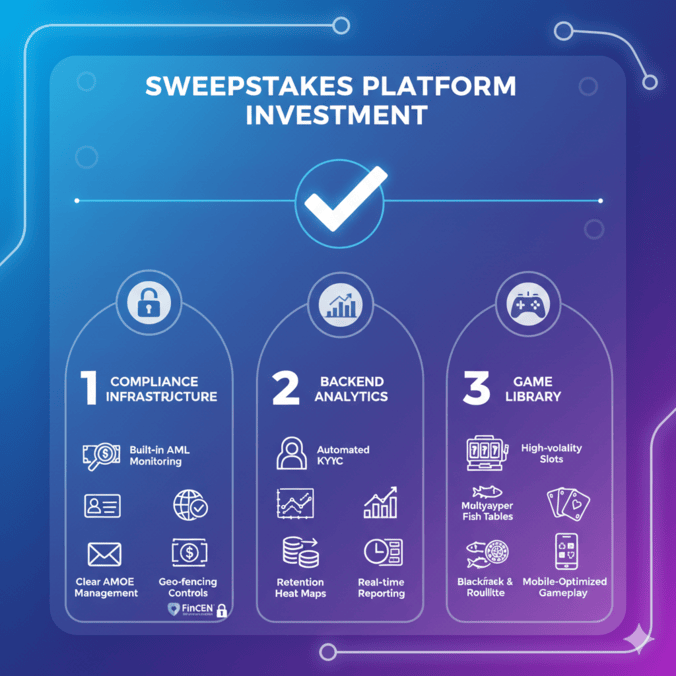
1️⃣ Compliance Infrastructure (Non-Negotiable)
If the platform doesn’t include:
- Built-in AML monitoring
- Automated KYC verification
- Geo-fencing controls
- Clear AMOE management
…it’s not ready for 2026.
For reference, anti-money laundering expectations and guidance are outlined by the Financial Crimes Enforcement Network (FinCEN). Any serious operator understands why that matters 🔒.
2️⃣ Backend Analytics That Actually Help You Scale
Revenue without data is guesswork.
Strong sweepstakes platforms offer:
- Player lifecycle tracking
- Retention heat maps
- Real-time redemption reporting
- Multi-location revenue dashboards
If you operate across cities, centralized analytics aren’t optional. They’re oxygen.
3️⃣ Game Library Depth & Engagement
In 2026, content variety directly impacts retention.
Top platforms provide:
- High-volatility slot libraries
- Multiplayer fish tables
- Virtual blackjack & roulette
- Mobile-optimized gameplay
Fish tables remain a major retention driver inside physical game rooms. Operators targeting hybrid models also prioritize responsive mobile interfaces
Top Sweepstakes Platforms for Game Rooms in 2026
| Game / System | Best For | Gameplay Strength | Operator Fit | Notes |
|---|---|---|---|---|
| Golden Dragon Sweepstakes | Fish-game focused rooms + high volume locations | Fish shooter variety + recognizable brand | Strong for distributors + retail rooms | A common “players already ask for it” title inside the Elite Entertainment ecosystem . |
| Panda Master Sweepstakes | Mixed audience rooms (fish + hybrid titles) | Bright visuals + broad appeal | Great for bundling with other systems | Often used as a “second pillar” alongside a flagship game. |
| YOLO Game (YOLO 777) | Operators who want YOLO demand coverage | Slots + fish-style ecosystems (varies by build) | Use as add-on when players request YOLO | For distributor inquiries, see Agents & Distributors Wanted . |
| Juwa Sweepstakes | Hybrid rooms + mobile-friendly operator setups | Strong bundling + familiar UI for players | Strong for multi-location onboarding | Frequently positioned as a strong bundle companion for retention lift. |
| Orion Star 777 | Multi-state operators + scalable operations | Multi-title ecosystem + mobile compatibility | Best “growth backbone” system | Popular for fast onboarding + tournament-style engagement patterns. |
White Label vs Custom Sweepstakes Platforms
Here’s where operators hesitate.
White Label Systems
- Faster launch
- Lower upfront cost
- Less backend control
Custom Builds
- Full brand ownership
- Higher cost
- Long-term flexibility
If you’re opening your first location, white label may make sense.
If you’re running multiple game rooms? Control matters.
Compliance Realities in 2026
Let’s be blunt.
Sweepstakes gaming is legal when structured properly. It becomes risky when operators cut corners—especially on disclosure, entry methods, and how promotions are communicated.
State-by-state differences still matter. Promotional gaming laws vary, and geo-restrictions aren’t theoretical—they’re operational safeguards.
You should always review updated guidance and best practices like the FTC’s sweepstakes resources and make sure your internal rules align with common “official rules” expectations (including no purchase necessary and entry clarity) outlined in sweepstakes law basics.
A platform that doesn’t offer geo-compliance tools is exposing you.
Internal Ecosystem Strategy for Operators
If you’re researching platforms for a growing brand like Elite Entertainment, you’re not just buying software. You’re building infrastructure.
Operators expanding under structured distributor networks often prioritize:
- Centralized reporting
- Distributor management tools
- Game content updates
- Redemption workflow automation
For example, multi-location operators often build their lineup around “hub pages” like GameRoom Distributors & Agents, then layer in game-specific systems such as Golden Dragon, Juwa, and Orion Star so compliance and scalability stay aligned.
Strategic growth requires system harmony.
AI & Personalization Are Reshaping Sweepstakes Platforms
This part catches many operators off guard.
AI-powered sweepstakes systems now analyze:
- Player engagement patterns
- Time-on-machine behavior
- Redemption frequency
- Bonus response trends
Personalized promotions improve retention because they match real player behavior—not guesses
Mobile-First Optimization Is No Longer Optional
Over 70% of sweepstakes platform interaction now happens on mobile interfaces.
If your sweepstakes gaming software:
- Lags on smartphones
- Breaks on tablet view
- Feels clunky
…you lose players before they redeem.
Mobile responsiveness directly affects revenue.
Revenue Share vs Flat Licensing: Which Model Wins?
This is a serious operator conversation.
Revenue Share Model
- Lower upfront investment
- Platform earns percentage of revenue
- Good for early growth
Flat License Model
- Higher fixed cost
- Greater long-term margin
- Better for established operators
There’s no universal answer. It depends on projected volume.
Risk Factors Operators Often Overlook
Let’s call these out clearly:
- Weak AMOE documentation
- Poor redemption transparency
- No identity verification
- Fragmented backend reporting
- Unverified RNG systems
If your platform provider avoids discussing compliance in detail… that’s a red flag.
Future Trends Shaping Sweepstakes Gaming in 2026
A few shifts you should watch:
- AI-powered engagement engines
- Crypto-compatible wallet integrations
- Cloud-hosted sweepstakes ecosystems
- Stronger AML automation (grounded in the kind of compliance expectations described by FinCEN)
Platforms that evolve will survive. Static systems won’t.
How to Choose the Right Sweepstakes Platform (Practical Checklist)
Before signing anything, ask:
- Does the system include AML & KYC integration (aligned with FinCEN guidance)?
- Are redemption policies clearly documented?
- Can the backend scale across multiple locations?
- Is mobile performance tested thoroughly?
What happens during audits or disputes around promo rules (see common expectations in sweepstakes rules basics)?
FAQ's
They can be legal when structured as a compliant promotional sweepstakes (i.e., no illegal “lottery” structure) and operated within the rules of the specific jurisdiction. In practice, legality and enforcement posture vary by state and sometimes by locality—so operators should treat this as a jurisdiction-by-jurisdiction compliance problem, not a blanket “yes.”
External references to start your compliance research: FTC: Lottery & Sweepstakes (consumer enforcement context), ANA: Sweepstakes guidance (industry standards),
and an example of how state laws can move against “sweepstakes casino” models: Lexology: New York law prohibiting “sweepstakes casinos”.
The “safest” structure is the one designed for documentation + auditability: clear AMOE (free alternative method of entry), transparent rules and redemption terms, strong geo-controls, and a compliance layer that can support risk controls (e.g., identity checks where appropriate, suspicious activity monitoring, and clean reporting).
External compliance references: Olshan: Sweepstakes law basics (official rules, AMOE, disclosures), FinCEN: BSA/AML guidance library,
and Title 31 context for gaming-related AML expectations: IRS: Title 31 anti-money laundering overview.
White label is typically faster for new operators because it shortens time-to-launch and often includes ready-made operational tooling. Custom systems offer long-term flexibility (features, reporting, integrations, and policy enforcement) but require more time, deeper oversight, and tighter change control.
Pricing usually ranges from revenue-share agreements (common for early-stage operators) to flat monthly licensing and enterprise models (more common at scale). Total cost is strongly influenced by compliance features, reporting depth, payment/redemption workflows, and the support burden.
Ignoring compliance structure while focusing only on revenue potential. In the real world, operators who win long-term treat compliance like operations: documented rules, training, clean reporting, and the discipline to adjust when laws or enforcement priorities change.
Helpful references for “rules + disclosures + no purchase” foundations: FTC sweepstakes resources and Sweepstakes rules checklist (legal overview).